
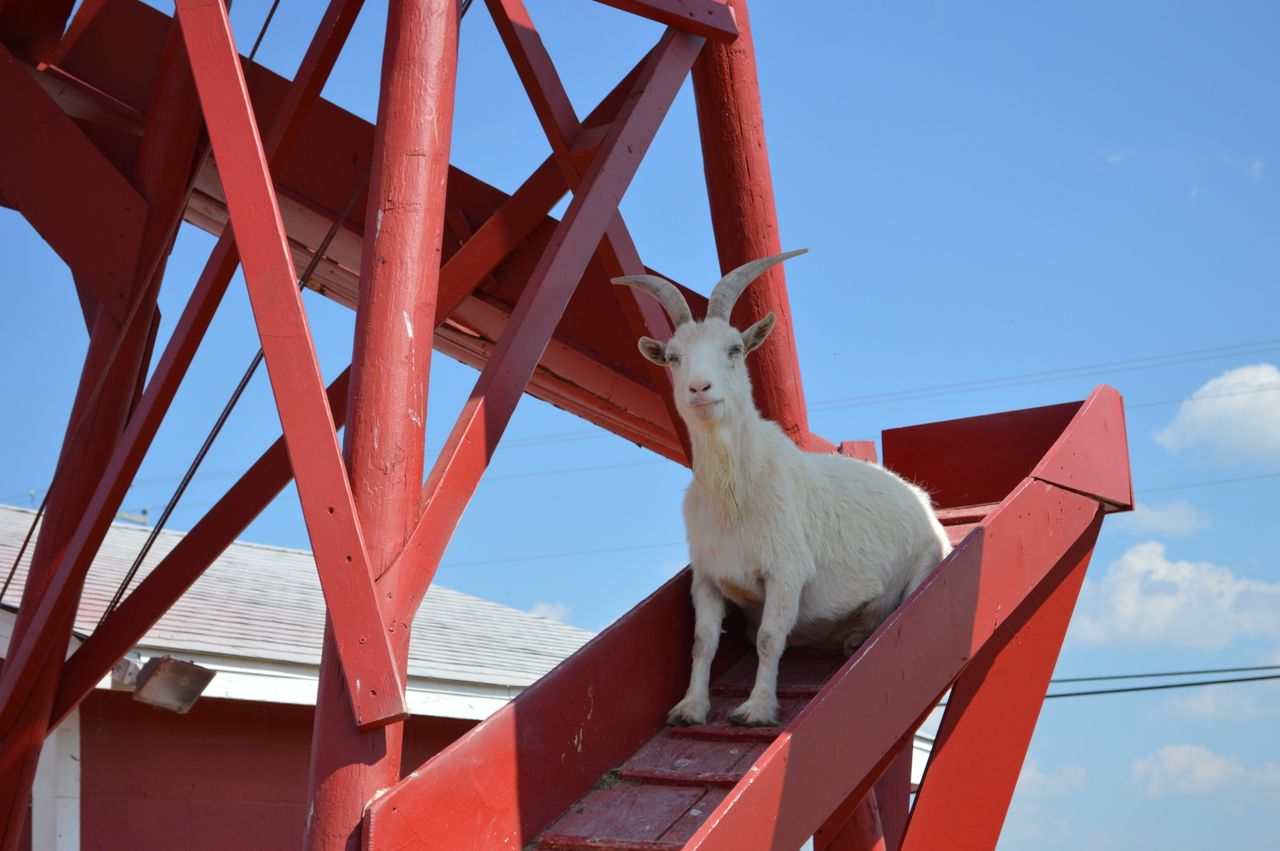
The Goats and the True Summit
In the high country of the Misty Range lived a herd of mountain goats, proud of their sure feet and strong horns. Each spring the young ones gathered on the lower slopes and declared the same ambition: “This year we will stand on the highest peak and look down upon the whole world.”
The nearest mountain rose steep and sharp against the sky. Its cliffs caught the morning sun like polished stone, and the path upward looked direct. The loudest of the young goats, a sturdy buck named Flint, pointed his horn toward it. “There!” he cried. “The highest wall. The fastest climb. Who among us is too slow or too careful to take it?”
Most of the herd cheered. They spent the first days sharpening their hooves on practice rocks, racing one another up short faces, and measuring progress by how many ledges they conquered before noon. They spoke of height climbed and time saved. A few even carved notches in their horns for every hundred feet gained. Efficiency became their song.
Only one goat did not join the rush. Old Grey, whose coat had long since turned the color of weathered stone, stood a little apart and studied the range. The nearest peak was impressive, yet beyond it, half-hidden by shifting mist, rose a broader massif whose true summit was higher still. The approach to that farther mountain was longer, gentler at first, and required crossing a high meadow and a narrow ice bridge. Grey had walked those slopes in younger seasons. He knew the nearest peak ended in a knife-edge ridge that led nowhere.
When he spoke of this, Flint laughed. “You measure the wrong things, old one. We measure height and speed. You measure distance and doubt. While you test the ground, we will already be at the top.” Several younger goats nodded. Team spirit favored the loud and the quick. Those who hesitated were left behind or mocked as timid.
Still, Grey set out on his own path. He moved slowly at first, testing each step, noting where the snow held and where the rock was loose. Along the way he met a solitary ewe named Lark who had left the main group after sensing something wrong in the frantic climbing. Together they made a modest base among the high grasses, rested when the weather turned, and chose gear suited to the longer route—thicker coats against the cold, careful pacing rather than bursts of speed.
Meanwhile the main herd pushed hard up the steep face. They celebrated every new ledge. They invented clever ways to leap wider cracks and to haul one another up sheer sections. Their efficiency was remarkable. Yet the higher they climbed, the more the mountain revealed its nature. The rock grew brittle. The wind sharpened. And the summit they sought proved to be only a false crest. Beyond it lay a narrow spine of stone that dropped away on both sides into empty air. There was no farther path, no wider view, only exhaustion and the sudden knowledge that they had spent their strength on a wall that led nowhere.
Some of the goats wanted to turn back at once. Others, proud of the height already gained, insisted they could force a way forward. Arguments broke out. A few had measured success only by ledges conquered; now those numbers felt hollow. One young goat, desperate to justify the climb, suggested they push onto a crumbling side face that overlooked a valley belonging to the wild sheep—territory the goats had long agreed was not theirs to take. “The view will still be grand,” he said. “And the height is height.” But even Flint hesitated. Something in that suggestion felt wrong, a violation of the quiet code the herd had always kept. The wall they had chosen was beginning to shape them in ways they did not like.
Far across the range, Grey and Lark reached the true summit as the mist finally lifted. From that broad top they could see every valley, every lower ridge, and the distant green meadows where the best forage would return each spring. The climb had demanded patience and a different kind of strength. It had also taught them the ground, the weather, and each other’s steady company. The mountain they chose had shaped their endurance and their judgment.
When the two groups met again on the lower slopes at summer’s end, the difference was plain. The goats who had raced the false peak returned leaner, quieter, and carrying a new caution. Some still spoke of the height they had reached. Others admitted the cost. Flint himself stood longer than usual before speaking. “We climbed well,” he said at last, “but we leaned our strength against the wrong wall.”
Old Grey only nodded. He did not lecture. He simply said, “A ladder is only as useful as the wall it rests against. Climb with all your skill, but first be certain the wall leads where you truly mean to go. The mountain you choose will teach you its own lessons—some of them lasting longer than the view.”
From that season onward the herd still valued strong legs and sure feet. Yet before any great climb they sent scouts to test the farther slopes, and they measured progress not only by height gained but by whether the path still pointed toward open ground and honest pasture. They learned that the nearest wall is not always the right one, that a team divided in direction wastes its strength, and that the habits formed on the wrong mountain can be harder to unlearn than the climb itself.
And so the goats of the Misty Range remembered: lean your ladder against the right wall, or every step only carries you farther from where you need to stand.

